
Join our Network!
Welcome to our global community committed to revolutionizing healthcare through proactive health promotion. With nearly 600 healthcare institutions spanning the globe, our network empowers hospitals, health services, and organizations to prioritize prevention, treatment, and holistic rehabilitation.
Why Join Us?
- Connect with like-minded professionals and organizations passionate about health promotion.
- Gain access to evidence-based resources and tools to enhance patient care and satisfaction.
- Embrace health-oriented strategies to elevate healthcare effectiveness and efficiency.
- Join hands with us to shape a healthier future for all.
If your hospital or healthcare service is dedicated to making a real impact and cultivating a health-promoting culture within your organization, we invite you to join our global community and ignite positive change! The International Network of Health Promoting Hospitals and Health Services (HPH) provides tailored membership levels to meet the specific needs of organizations in your country.

HPH Future Leaders Advisory Board
Become a Leader in your community
Are you a young, passionate healthcare professional eager to promote health and drive positive change in your community? The International Network of Health Promoting Hospitals (HPH) invites you to join us in shaping the future of healthcare leadership.

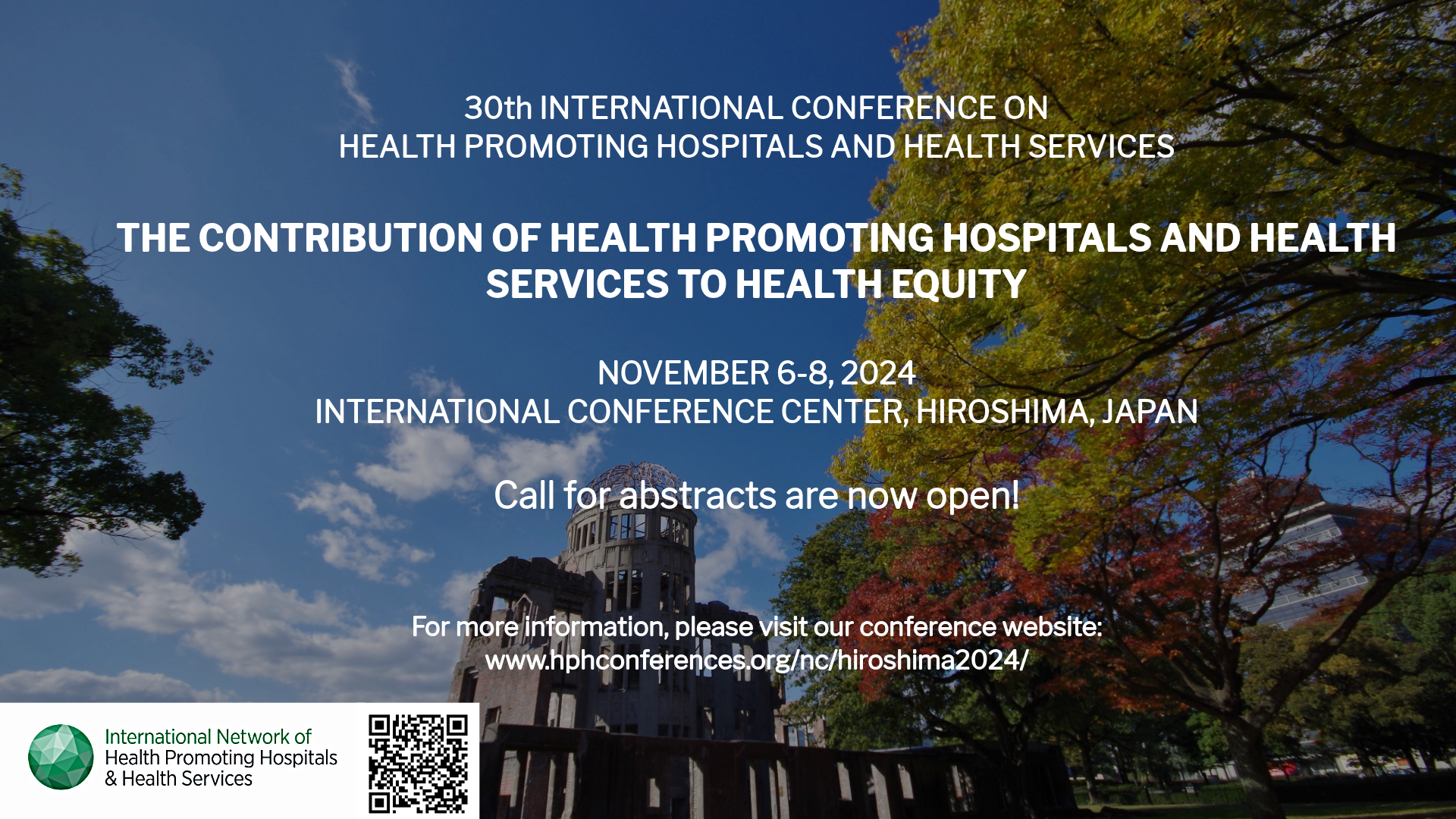
30th International Conference on Health Promoting Hospitals and Health Services, Hiroshima, Japan
Join us for the 30th International Conference on Health Promoting Hospitals and Health Services (HPH) in Hiroshima, Japan! This years conference will be hosted by the Japan HPH Network. We will delve into the theme of “The contribution of Health Promoting Hospitals and Health Services to health equity.”
We’ll explore the critical role of healthcare in achieving equity for all. From examining strategies for organizations to address health disparities to discussing approaches for improving community health equity, this conference promises insightful discussions, workshops, and presentations.

How to incorporate Health Promotion?

What are the global
HPH Standards?

Why join the HPH Network?
News
30th International Conference on Health Promoting Hospitals and Health Services
The International Conference on Health Promoting Hospitals and Health Services (HPH) is the main event of the international HPH network. It is a forum of learning and exchange on health promotion in and by health services for health practitioners, consultants,...
Supporting WONCA’s Call for a Just & Equitable Transition to Sustainable Energy to Safeguard Health
Climate change is having far-reaching impacts on global health, causing harm and suffering on a massive scale. Despite this growing crisis, new fossil fuel projects and rising greenhouse gas emissions persist. To combat this climate health emergency, we must put an...
32nd Meeting of the HPH General Assembly
The 32nd Meeting of the HPH General Assembly took place online on May 5th. HPH Coordinators, Task Force Leaders, single members, the International HPH Secretariat and Conference Secretariat, met to discuss many exciting topics such as plans for the upcoming 29th...